
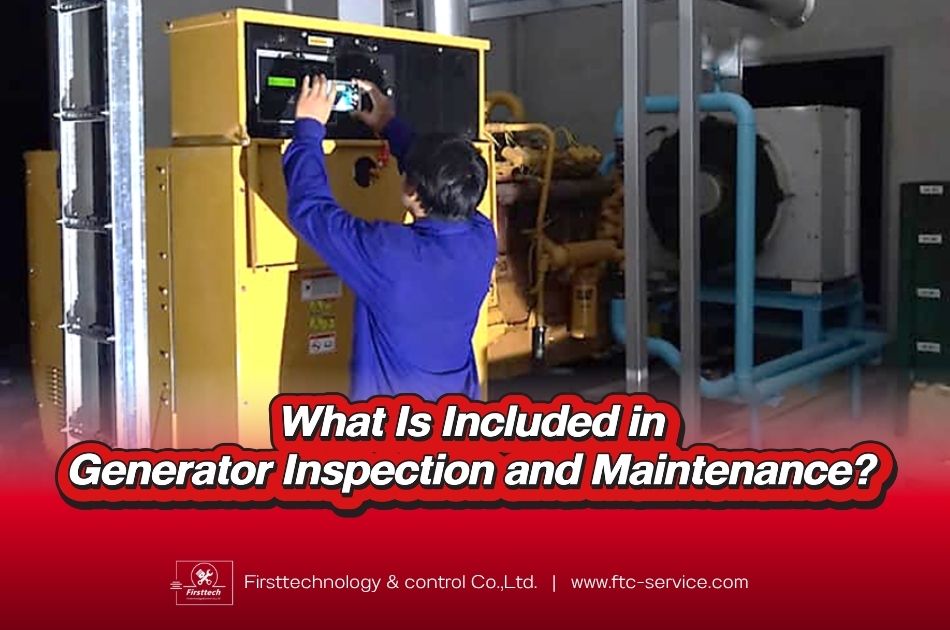
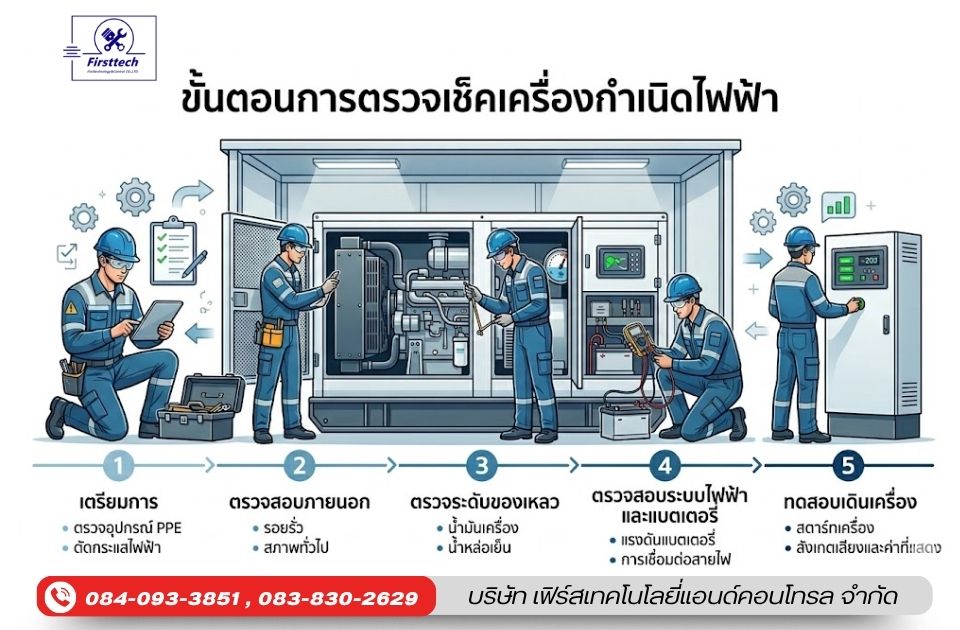
Effective generator inspection must cover both mechanical and electrical systems to ensure reliable operation at all times. Proper inspection procedures that follow international standards help reduce the risk of power supply failure during critical situations. The inspection process should begin with checking the fuel system, cooling system, and continue through automatic transfer switch testing. This guide focuses on practical procedures that maintenance personnel can apply to maximize safety for buildings and industrial facilities.
Generator Maintenance Checklist
Following standard engineering procedures strictly can significantly reduce repair costs and extend equipment lifespan efficiently. The following guidelines will help maintenance personnel inspect generators correctly and thoroughly according to scheduled maintenance intervals.
Weekly Inspection
- Fuel Level Inspection Check that the fuel level is no lower than three-quarters of the tank or sufficient for at least 8 hours of continuous operation.
- Engine Oil Inspection Use the dipstick to verify that the oil level is within the specified range. The oil should remain clean and should not appear excessively dark or contaminated.
- Cooling System Inspection Inspect the radiator coolant level and reserve tank. Also check the tension of the cooling fan belt.
- Battery and Charging System Measure battery voltage using a multimeter to ensure it remains within the standard operating range. Clean battery terminals to prevent corrosion buildup.
Monthly Inspection
- No-load Test Start and run the generator without load for approximately 15 minutes to observe voltage and frequency readings on the control panel.
- Belt Inspection Check alternator and fan belts for cracks, wear, and proper tension. If deterioration is found, prepare for immediate replacement.
- Ventilation System Inspection Inspect ventilation louvers to ensure they fully open and close properly, and confirm there is no excessive dust accumulation blocking airflow.
- Leak Inspection Inspect beneath the generator and around connection points for oil or coolant leakage that may not be visible during weekly inspections.
Scheduled Maintenance Based on Operating Hours
- Engine Oil and Filter Replacement Replace engine oil and oil filters every 250–500 operating hours or at least once per year to maintain lubrication performance and reduce internal friction.
- Fuel Filter Replacement Replace fuel filters to prevent contaminants from entering the fuel pump system, which may cause unstable engine operation or sudden shutdown.
- Air Filter Inspection Clean or replace air filters to ensure optimal air-fuel mixture efficiency inside the combustion chamber.
- Alternator Inspection Inspect carbon brushes for wear and clean the windings to prevent dust accumulation and overheating.
Electrical System and Control Panel
- Control Panel Inspection Check voltage, frequency, and engine oil pressure readings to ensure all values remain within safe operating limits.
- Automatic Transfer Switch (ATS) Testing Simulate a power outage to verify that the ATS system can automatically start the generator and transfer electrical load correctly.
- Electrical Connection Inspection Check all power and control wiring connections to ensure terminals are tight and free from burn marks caused by electrical arcing.
- Safety Protection System Test the emergency stop button and verify the automatic shutdown system operates correctly during overheating conditions.
Conclusion
Generator inspection and maintenance require extreme caution because the system involves both high mechanical torque and high-voltage electrical energy. Maintaining organized service records helps predict future issues and serves as important documentation for quality assurance and compliance with engineering standards. For additional guidance, contact First Technology and Control Co., Ltd., providing professional inspection, maintenance, repair, and consultation services by experienced technicians.