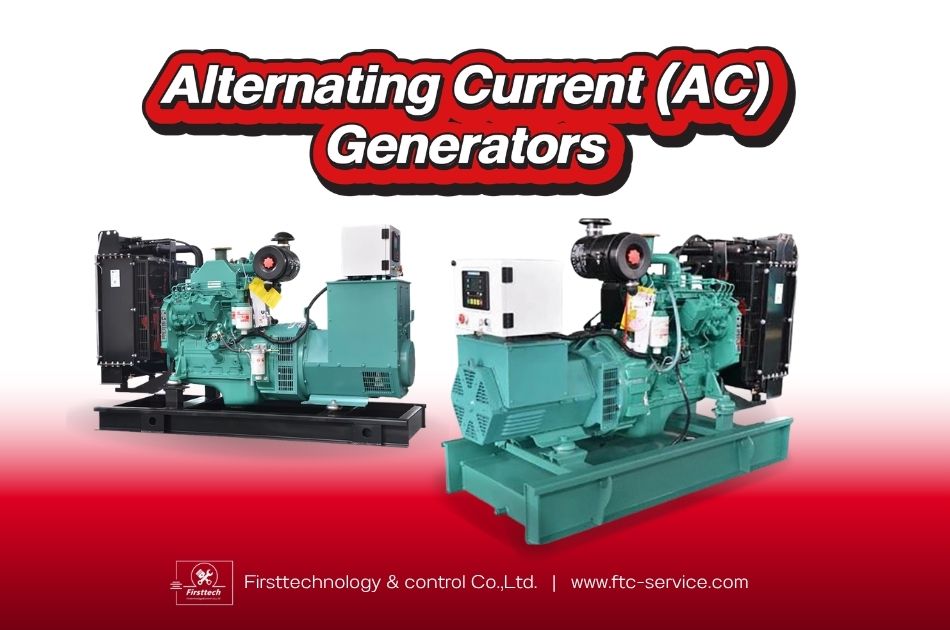
Alternator (AC Generator): The Core of Backup Power Systems
An Alternator or AC Generator is the primary heart of a backup power system. From the experience of the engineering team at First Technology and Control, understanding its operating principles and implementing a proper maintenance plan can reduce the risk of system failure by more than 80%.
Operating Principle and Key Components
An alternator converts mechanical energy into electrical energy through electromagnetic induction. The following major components should be inspected regularly to ensure optimal performance:
Stator & Rotor
These are the main structures responsible for generating electricity. They must remain clean and maintain proper insulation resistance values.
Automatic Voltage Regulator (AVR)
The AVR is a critical component that maintains stable output voltage. A deteriorated AVR can cause unstable voltage and damage downstream electrical equipment.
Protection Systems and Fault Warning Functions
A high-standard generator should include protective systems that shut down the machine before severe damage occurs.
Overcurrent Protection
Protects against excessive current that could burn generator windings.
Under / Over Voltage Protection
Stops operation when voltage levels fall outside safe operating limits.
High Temperature Sensor
Monitors winding temperature, which is a key indicator of overload conditions and overheating.
Electrical Testing for Winding Condition Assessment
Before a generator fails, warning signs can often be detected through specialized electrical testing.
Insulation Resistance (IR) Test
Measures insulation resistance to evaluate the risk of electrical leakage or grounding faults.
Polarization Index (PI)
Evaluates long-term insulation stability and helps identify excessive moisture or contamination within the windings.
Modern Alternator Technology: Efficiency and Sustainability
Today’s alternator technology has evolved significantly to improve energy efficiency and operational reliability.
Digital AVR
A digital voltage regulation system that provides greater accuracy than analog systems and allows fine parameter tuning through software.
High Efficiency Winding
Special winding designs reduce energy losses, improving overall efficiency and lowering fuel consumption of the prime mover engine.
Selecting the Right kVA Rating
One of the most common issues is incorrect generator sizing relative to the actual load demand.
The basic sizing formula is:
kVA=\frac{kW}{0.8}
where the power factor is typically assumed to be 0.8.
Technician’s Recommendation
For applications involving large motors, the generator capacity should account for starting current, which can be 2–3 times higher than normal operating current.
Maintenance Strategy
To ensure continuous 24/7 readiness, the following preventive maintenance practices are recommended:
Monthly Inspection
- Check electrical connection points
- Inspect external machine condition
- Monitor abnormal vibration or noise
Load Testing
Perform load tests under actual operating conditions to verify that the generator can deliver full rated capacity reliably.
Cleanliness and Ventilation
Dust accumulation and oil contamination are among the leading causes of generator overheating and winding failure.
Conclusion
Choosing a high-quality alternator and implementing a structured maintenance plan are essential for maintaining a reliable backup power system.
First Technology and Control provides inspection, maintenance, repair, and consulting services by experienced technicians to ensure your business operations continue without interruption during emergency situations.
Frequently Asked Questions (FAQ)
Q: Why is the generator voltage unstable or dropping frequently?
A: The most common causes are a deteriorated AVR or operating the generator beyond its rated capacity. Immediate inspection of the voltage regulation system is recommended.
Q: How is a brushless system better than a brushed system?
A: Brushless systems provide greater stability and eliminate sparking caused by carbon brushes. This results in longer service life and lower maintenance requirements.
Q: What causes excessive heat buildup in an alternator?
A: The three main causes are:
- Overloading
- Blocked or insufficient ventilation
- Loose electrical connections causing high resistance