
Flare Gas to Power: A Cost-Effective Solution for Energy and the Environment
Flare Gas to Power refers to converting flare gas into electricity. Flare gas is excess gas generated by production processes that, in some industries, may be sent to a flare stack for appropriate disposal. However, when the gas can be recovered and put to productive use, a Gas-to-Power system can be designed to convert the energy contained in the gas into electrical power.
In the agricultural and industrial sectors, a common example is Biogas, which is produced through the decomposition of organic matter—such as animal manure, wastewater, or other organic feedstocks—under anaerobic conditions.
How Is Gas Converted into Electricity?
Generating electricity from gas involves more than simply connecting a gas supply to a generator. The entire system must be designed to suit both the properties of the gas and the electrical demand at the site.
The process generally begins with collecting gas from its source. The gas then enters a treatment system that controls moisture, contaminants, pressure, and other components that could affect the engine. Once the gas meets the required specifications, it passes through the Gas Train and enters the gas engine.
The engine converts the fuel’s energy into mechanical energy, which then drives a Generator or Alternator to produce electricity. A Control Panel and protection system regulate the unit’s operation to match the electrical load.
An efficient system therefore consists of several components, including a gas collection system, gas treatment system, contaminant-removal system, Gas Train, gas engine, Generator, control system, cooling system, and exhaust system.
Why Must Gas Quality Be Improved Before Generating Electricity?

Gas quality directly affects engine efficiency and service life, especially in Biogas systems, where the gas may contain several contaminants, including moisture and hydrogen sulfide, or H2S.
H2S can cause corrosion and accelerate equipment deterioration. Therefore, an H2S-reduction system is usually required before the gas enters the engine. Examples include a Desulfurization Tank or an adsorption system that uses media suited to the specific gas conditions.
One approach is to use Compressed Iron Oxide Pellets in a dry H2S-removal process. Gas flows through a bed of material inside the tank, where the media captures or reacts with H2S under suitable operating conditions.
Tank and media sizing should not be based solely on gas volume. H2S concentration, flow rate, moisture, temperature, and contact time should also be analyzed to ensure that the gas treatment system operates effectively.
Why Is Converting Flare Gas into Electricity Cost-Effective?
The reason Flare Gas to Power is a cost-effective solution for energy and the environment is that it turns energy that might otherwise be wasted into useful electrical power. The economic value of the system depends on gas quantity and quality, operating hours, generator efficiency, and the facility’s electricity-consumption profile.
1. Convert Excess Gas into Energy
If a production process generates gas continuously, using it to produce electricity adds value to an existing resource instead of allowing its energy to be lost through flaring alone.
2. Reduce Electricity Purchases from the Grid
The electricity generated can be used for on-site loads such as water pumps, motors, ventilation systems, aeration systems, cooling systems, and other equipment in factories and farms. This can reduce the amount of electricity purchased from the grid in line with the system’s actual generating capacity.
3. Reduce Long-Term Energy Costs
The value of the system does not depend on the equipment price alone. It should also be assessed based on fuel savings, operating hours, the cost of displaced grid electricity, spare parts, and maintenance expenses. If the site has a sufficient gas supply and a suitable electrical load, a gas-to-power system can support long-term energy-cost management.
4. Connect Waste Management with Energy Production
For farms and factories with wastewater-treatment or organic-digestion systems, producing Biogas and using it to generate electricity creates an integrated connection between waste management and energy production.
5. Use Resources More Efficiently
Recovering gas for electricity generation helps reduce energy losses and, in some cases, can lower dependence on external fuels. However, environmental performance should be evaluated across the entire system—from gas collection and treatment to engine efficiency and exhaust-emission control.
Factors to Consider Before Installing a Gas-Powered Generator
Generator selection should begin with actual site data rather than focusing only on the kW or kVA rating. At least five factors should be reviewed: available gas volume, gas composition, methane content and heating value, H2S level and moisture, and the characteristics of the electrical load.
Operating hours, the cooling system, control system, maintenance requirements, and installation area should also be considered to ensure that the generator can operate continuously and is suited to the actual operating environment.
Biogas Generators for Farms and Factories
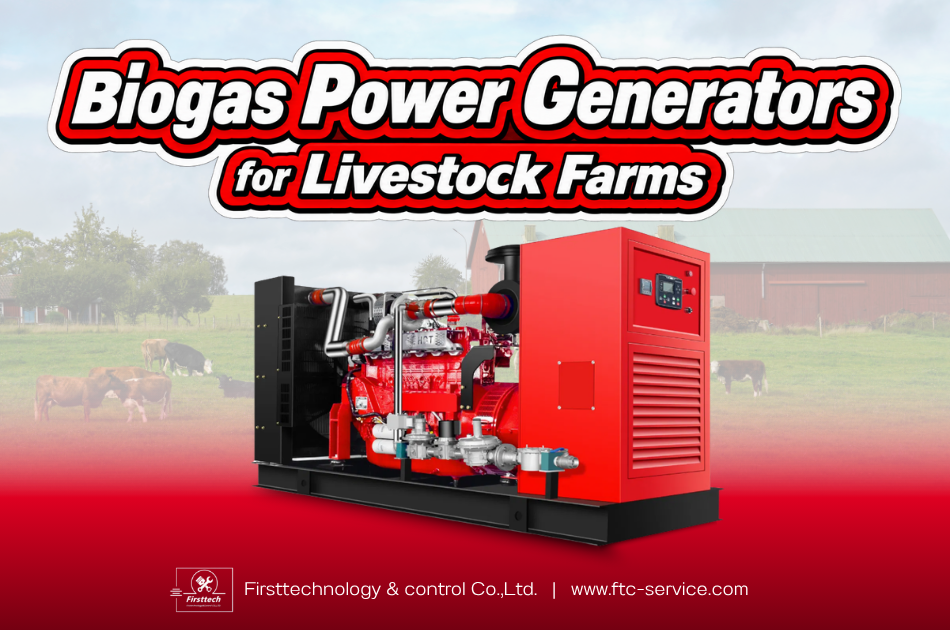
For farms and factories that produce biogas, a Biogas Generator Set is another system capable of converting the gas into electricity. Typical applications include pig farms, poultry farms, dairy farms, food-processing plants, and wastewater-treatment systems.
First Technology and Control Co., Ltd. (FTC) provides biogas-powered generator solutions with generating capacities ranging from 20–2,000 kW, according to the company’s information. Its services include design, manufacturing, installation, control systems, maintenance, modification, and overhaul.
Selecting a Biogas Generator or gas-to-power system should therefore begin with a detailed analysis of the site’s gas supply and electrical load. This information is essential for determining the appropriate generator capacity, gas treatment system, and supporting equipment.
Flare Gas to Power is a cost-effective solution for energy and the environment when the system is designed correctly. It is more than simply generating electricity from gas: it recovers available energy, reduces waste, and improves the long-term energy-management efficiency of a factory or farm.
Frequently Asked Questions About Flare Gas to Power
Q Can flare gas be used to generate electricity?
A Yes. Flare gas can be used as fuel if its properties are suitable and the available volume is sufficient. The gas quality must first be assessed, and an appropriate treatment system must be designed before the gas enters the generator.
Q What are the benefits of converting flare gas into electricity?
A It recovers energy that might otherwise be lost through flaring, reduces dependence on electricity from the grid, and allows the generated electricity to be used within a factory, farm, or on-site utility system.
Q What types of businesses are suitable for a Biogas Generator?
A A Biogas Generator is suitable for facilities that continuously produce biogas through their operations, such as livestock farms, food-processing plants, wastewater-treatment facilities, and businesses with biogas-production systems. The quantity and quality of the gas must be assessed before selecting a generator
Q How should a gas-powered generator be selected?
A Selection should be based on gas volume, methane concentration, gas quality and contaminants, operating hours, electrical-load characteristics, and the gas treatment and control systems. These factors help ensure efficient operation and suitability for the site.
Q What gas-powered generator services does First Technology and Control provide?
A First Technology and Control Co., Ltd. provides Biogas Generator Set services covering design, manufacturing, installation, control systems, maintenance, modification, and overhaul. The company offers gas-powered genera