
What Is a Generator Control System?
A generator control system is the processing and command unit that acts as the “brain” of a generator. Its primary function is to monitor the condition of the engine and alternator, as well as control the start and stop operations according to predefined conditions.
Main Functions of the Control Module
- Monitoring Monitors voltage, frequency, and electrical current values.
- Protection Protects the generator from damage caused by issues such as Over Voltage, High Temperature, or Low Oil Pressure.
- Automation Automatically starts the generator when a power outage (Power Failure) occurs.
Types of Generator Control System Installations Commonly Used Today
When selecting a generator control system, businesses can choose based on the suitability of their application as follows:
- Manual Control Panel Suitable for backup generators in locations with simple operations or where staff are always available onsite. Users must manually press the Start button and switch the power source themselves.
- Automatic Mains Failure (AMF) & Automatic Transfer Switch (ATS) This is currently the most popular system. It works together to monitor utility power supplied by the grid (PEA/MEA). When a power outage occurs, the control system automatically starts the generator and transfers the electrical load to the generator within a few seconds.
- Synchronizing Control Panel Designed for facilities operating multiple generators simultaneously. The control system adjusts the frequency and voltage of each generator to match before sharing the electrical load, ensuring maximum efficiency and fuel savings.
Standard Procedures for Generator Control System Installation
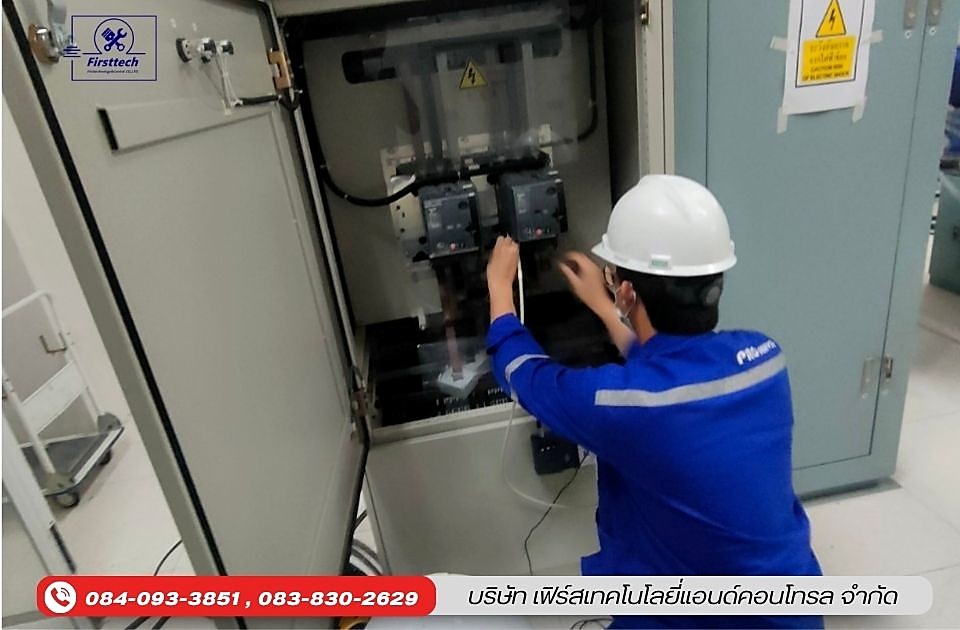
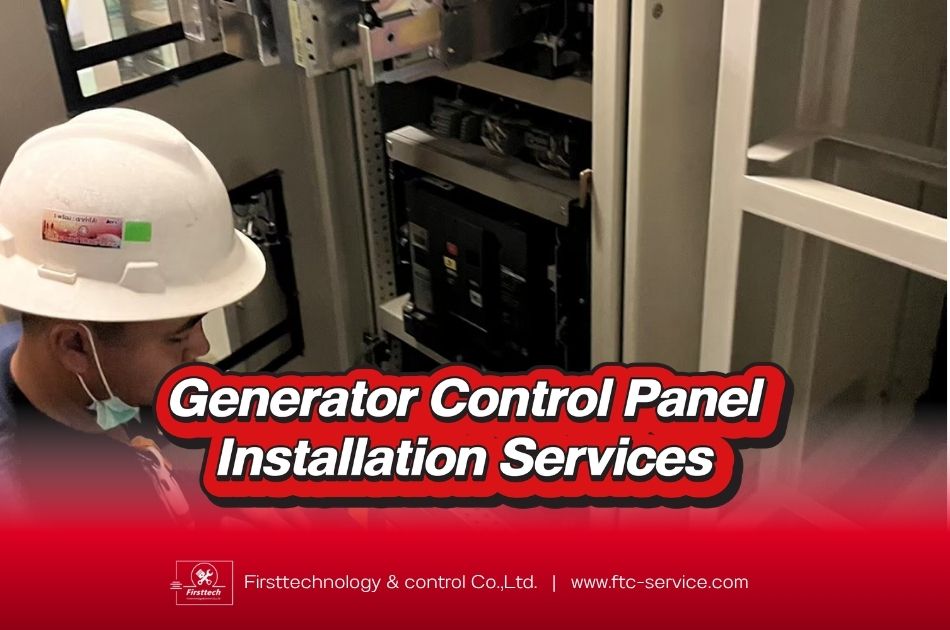
Installing a control system is not simply about wiring. It is an engineering process that requires precision and expertise. The team at [Service Provider Name] follows these professional procedures:
1. Site Survey & System Design
Engineers inspect the generator size (kVA), customer load characteristics, and control panel installation area in order to select the most suitable equipment, such as controllers from Deep Sea Electronics (DSE), ComAp, or SmartGen.
2. Control Panel Fabrication
- Uses standard steel enclosures with dust and water protection (IP Standard)
- Internal components are arranged systematically with proper ventilation
- Circuit breakers and protection relays are selected according to international standards
3. Control Wiring & Power Wiring
At First Technology and Control Co., Ltd., special attention is given to wire numbering (Wire Markers) to simplify future maintenance. Signal cables are separated from power cables to prevent electrical interference.
4. Parameter Configuration
Includes tuning engine speed settings, start delay timing, and configuring safety shutdown systems according to each engine model specification.
5. Testing & Commissioning
The final and most critical process includes:
- No Load Test – Running the generator without load to verify sensor accuracy
- Load Test – Testing actual power supply under real load conditions
- Simulation Test – Simulating a power outage to verify ATS operation
Generator Control Systems Are an Investment in Safety
Generator control system installation is a critical task that should never be overlooked. If the control system is inefficient, the generator may fail to start during an actual power outage or, even worse, cause damage to electrical loads within the building.
If you are looking for a professional expert in generator control systems, First Technology and Control Co., Ltd. is ready to provide complete services from consultation to installation and commissioning. With a reliable control system, you can be confident that whenever a power outage occurs, your business operations will continue without interruption.